

Most IT managers evaluate help desk software by comparing feature checklists. They count integrations, scan SLA configuration options, and ask about CMDB support. What they rarely ask is whether the platform can adapt to a product at different stages of its commercial life. That blind spot is expensive in operational terms. A product in its growth stage generates a very different ticket profile than one in decline. Incident priority weighting, knowledge article coverage, escalation paths, and FCR targets all need to shift accordingly. Teams that fail to account for this end up staffing incorrectly, missing SLA targets, and delivering an inconsistent customer experience that erodes trust at exactly the wrong moments.
Why the Product Life Cycle Reframes Help Desk Strategy
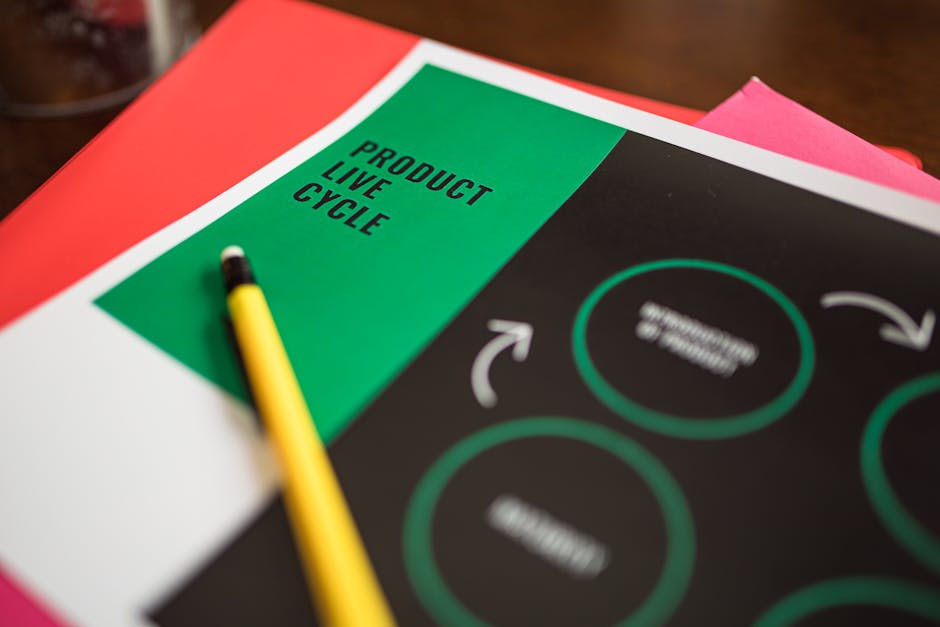
The product life cycle describes the arc a product travels from introduction through growth, maturity, and eventual decline. According to Investopedia, the product life cycle consists of four distinct stages: introduction, growth, maturity, and decline, each carrying fundamentally different demand characteristics. For IT support and operations teams, those characteristics translate directly into ticket volume patterns, support complexity, and customer tolerance for resolution delays.
During introduction, ticket queues fill with configuration questions, onboarding errors, and integration failures. Customers are unfamiliar with the product, and agents lack the knowledge article depth to resolve issues at first contact. FCR rates are naturally lower. MTTR climbs. CSAT scores can mislead, since early adopters often have higher patience than the mainstream audience that arrives during growth.
By the time a product reaches maturity, the incident profile changes entirely. Common issues are documented. AI-assisted ticket deflection works well because the knowledge base is dense and well-indexed. The challenge shifts to maintaining SLA consistency at higher ticket volumes without increasing headcount proportionally. Decline introduces a different pressure: support teams shrink while a residual customer base continues to submit tickets, often about edge cases that were never fully documented.
“Support operations that ignore the product life cycle stage tend to over-resource mature products and under-resource products in growth, which is precisely backward from what customers need.”
Recognising which stage a product occupies at any given time is the starting point for calibrating every operational parameter in the help desk stack.
Structuring Ticket Workflows and SLAs by Life Cycle Stage
Consider an IT support team of 12 managing 500 weekly tickets across three priority tiers for a SaaS product that has just entered the growth stage. Ticket volume is rising at roughly 20 additional tickets per week. P1 incidents related to onboarding failures are generating disproportionate escalation traffic, pulling senior engineers away from change requests and infrastructure work. The problem is not headcount. It is workflow design that was built for the introduction stage and never updated.
Mapping SLA targets to life cycle stage requires intentional configuration. During introduction, SLA tiers should be weighted toward response speed rather than resolution speed, because agents will often need to escalate before resolving. First response SLAs signal to customers that their issue is acknowledged even when the fix is not immediate.
During growth, the calculus shifts. Ticket volume accelerates and the support team cannot scale linearly. This is where AI-assisted triage earns its value: the platform auto-classifies tickets by priority using NLP, surfaces relevant knowledge articles before the agent types a response, and flags SLA breach risk 15 minutes before the deadline. Deflection rates improve as the knowledge base matures, and MTTR drops without requiring additional agents.
Maturity calls for SLA stability and precision. At this stage, the CMDB should reflect a well-mapped service catalog. Change requests follow established approval chains. Incident priority rules are refined enough that automated routing handles the majority of P3 and P4 tickets without human triage. CSAT scores tend to peak here because the support process is predictable.
| Life Cycle Stage | Primary Ticket Type | Key SLA Focus | AI Role | Critical Metric |
|---|---|---|---|---|
| Introduction | Onboarding errors, configuration | First response speed | Basic classification, routing | Escalation rate |
| Growth | Integration failures, feature questions | MTTR reduction | NLP triage, knowledge surfacing | FCR rate |
| Maturity | Edge cases, change requests | SLA consistency | Ticket deflection, SLA breach alerts | CSAT score |
| Saturation | Performance issues, bulk requests | Volume management | Zero-touch resolution for repeat issues | Deflection rate |
| Decline | Legacy edge cases, migration help | Resource efficiency | Self-service portal, automated FAQs | MTTR per agent |
Building Knowledge Management That Scales With the Life Cycle
Knowledge management is the operational lever most teams underinvest in during introduction and then scramble to build during growth. The result is a reactive knowledge base: articles get written in response to escalations rather than in anticipation of ticket categories. This pattern inflates MTTR and reduces FCR at the worst possible time.
A more disciplined approach treats knowledge article development as a parallel workstream to product development. When a product enters introduction, the support team should already have draft articles covering the ten most anticipated failure modes, identified in collaboration with engineering and product management. Those articles feed into the AI layer immediately, so even if agents lack deep familiarity, the platform can surface guidance during ticket handling.
According to Coursera, the product life cycle begins at the time a product is introduced to consumers, which means support readiness should be part of the launch checklist, not an afterthought addressed once tickets start arriving. In ITIL 4 terms, this falls under the knowledge management practice, which emphasises making the right information available at the right time across the service value chain.
During growth, knowledge articles should be reviewed for accuracy on a defined cadence, typically every 30 days for high-traffic articles. The platform should track which articles are surfaced most frequently during ticket resolution and flag ones with low resolution rates for revision. AI can identify gaps by analysing ticket categories that consistently result in escalation despite an article being attached.
As the product enters decline, the knowledge management priority shifts to consolidation. Articles covering deprecated features should be clearly marked. Migration guides should be elevated in the self-service portal. Remote IT support teams handling legacy products need concise, accurate documentation because they cannot rely on institutional memory from colleagues who have moved to newer product lines.
Aligning Customer Experience Metrics to Life Cycle Expectations

Measuring customer experience without anchoring metrics to the product life cycle stage produces misleading signals. A CSAT score of 3.8 out of 5 means something very different for a product in week two of introduction than for a product that has been in maturity for three years. Context determines whether that number represents progress or decline.
IT managers and operations directors should establish stage-specific benchmarks for each core metric: CSAT, FCR, MTTR, and SLA compliance rate. Those benchmarks should be documented in the service management platform and reviewed when a product transitions between stages. Automatic SLA rule updates triggered by a life cycle stage change reduce the risk of teams continuing to operate against outdated targets.
According to Pragmatic Institute, products follow a life cycle that starts with their introduction, and each phase demands a different strategic posture. For support operations, that posture includes how the team communicates resolution timelines to customers. During introduction, proactive status updates reduce inbound follow-up tickets. During decline, clear end-of-life communication reduces confusion and manages customer expectations before the product is retired.
Employee experience in ITSM also factors here. Agents handling tickets for declining products often face low morale because issues are harder to resolve and customers are frustrated. Support leads should monitor agent-level MTTR and escalation rates during decline to identify burnout risk and adjust ticket distribution accordingly. A well-configured platform surfaces these signals automatically rather than waiting for a team retrospective to uncover them.