
Every quarter, support teams absorb the downstream consequences of software defects they never tested for. A misconfigured change request workflow pushes tickets to the wrong queue. An untested portal update breaks the self-service login flow. Suddenly, ticket volume spikes, SLA breach alerts fire, and CSAT scores fall before anyone traces the problem back to a deployment that skipped regression testing. The connection between software testing basics and customer experience quality is direct and operational, yet most support leaders treat them as separate domains owned by separate teams. That separation is exactly where service quality erodes. Understanding what structured testing disciplines look like, and how they apply to the tools support teams rely on daily, is one of the most underused levers available to IT managers trying to protect CSAT performance.
Why Software Defects Become Customer Service Problems
Help desk and ITSM platforms are not static infrastructure. Ticket routing logic, SLA policy engines, AI-assisted triage layers, and self-service portals all receive regular updates. Each update introduces risk. When a change to an escalation path goes untested, the next P1 incident may route to an unmonitored queue. When an update to a knowledge article search algorithm is deployed without functional testing, agents stop finding relevant articles mid-call, increasing average handle time and lowering first-contact resolution.
According to BugBug (2025), software testing is the process of evaluating, verifying, and ensuring the functionality, quality, and reliability of a software application throughout its development lifecycle, and that principle applies with equal force to the ITSM tools support teams operate, not only to the products engineering teams ship.
Consider an IT support team of 12 managing 500 weekly tickets across three priority tiers. A deployment updates the SLA timer logic for P2 incidents. The change goes live on a Friday afternoon without regression testing. By Monday, P2 tickets are breaching SLA silently because the timer is no longer triggering escalation alerts. The team only discovers the defect when a stakeholder escalates directly. By that point, dozens of tickets have missed SLA, CSAT survey responses reflect the delays, and the support lead is explaining a metric drop they did not see coming.
This is not an edge case. It is a predictable consequence of treating software testing as someone else’s responsibility once a tool is deployed. Structured quality management practices inside support operations need to include basic testing checkpoints tied to every configuration change, not just new feature rollouts.
“A defect in a ticket routing rule or SLA policy engine is as damaging to CSAT as a defect in the customer-facing product itself, because the support team is the customer’s last line of confidence.”
The Core Testing Types That Apply Directly to ITSM Environments
Software testing basics organize into a small set of test types, each of which maps to a specific risk category inside a live help desk environment. IT managers do not need to run full QA cycles, but they do need to understand which test types matter most for service delivery continuity.

Functional Testing
Functional testing verifies that a specific feature performs as specified. In an ITSM context, this means confirming that a newly configured approval workflow for change requests actually routes to the designated approvers, that auto-classification tags tickets correctly by incident category, and that the SLA policy applies the right priority tier based on the submitting department. According to Autonoma AI (2025), software testing verifies code works correctly before users encounter problems, and catching bugs early reduces the operational impact compared to discovering them in production. The same logic applies to ITSM configurations: a broken approval workflow discovered in testing takes minutes to fix; the same defect discovered during a live change request can delay critical infrastructure work for hours.
Regression Testing
Regression testing checks that a new change has not broken existing functionality. This is the most frequently skipped step in support tool administration, and the one that causes the most visible CSAT damage. Every time an ITSM platform receives an update, whether a vendor patch or an internal configuration change, regression testing should confirm that core ticket flows, escalation paths, SLA timers, and integration points with the CMDB still behave as expected. Teams that maintain a short regression checklist, covering the ten most critical workflows, can complete this in under an hour.
User Acceptance Testing
User acceptance testing (UAT) involves actual end users confirming that a change works the way they expect it to. For support teams, this means having two or three agents walk through a new self-service portal update or a redesigned ticket submission form before it reaches all employees. UAT catches usability gaps that functional tests miss, such as a form field labeled in technical terminology that customers do not understand, which drives unnecessary ticket creation and inflates the queue.
| Test Type | What It Checks | ITSM Application | Primary CSAT Risk if Skipped | Recommended Frequency |
|---|---|---|---|---|
| Functional Testing | Feature works as specified | Ticket routing, SLA policies, approval workflows | Misrouted tickets, missed SLAs | Every configuration change |
| Regression Testing | Existing features still work | Escalation paths, CMDB integrations, timer logic | Silent SLA breaches, broken automations | Every platform update |
| User Acceptance Testing | End users can complete key tasks | Self-service portal, ticket submission forms | Ticket surge from confused requesters | Before portal changes go live |
| Integration Testing | Connected systems exchange data correctly | CRM sync, monitoring tool alerts, CMDB updates | Duplicate tickets, lost incident context | After any integration update |
| Performance Testing | System handles expected load | Portal response times during peak hours | Agent frustration, delayed responses | Quarterly or before peak periods |
How Testing Disciplines Translate to FCR and CSAT Gains
The operational link between testing discipline and customer satisfaction metrics runs through two specific KPIs: first-contact resolution and mean time to resolution. Both are directly sensitive to the quality of the tools agents use. When a knowledge base search surface returns outdated articles because an indexing update was never tested, agents spend longer finding answers. FCR drops. When the AI that auto-classifies tickets by priority is reconfigured but the new classification logic is not validated against historical ticket patterns, incidents land in the wrong queue. MTTR climbs.
According to Keploy (2025), the central question before any software release is whether it is safe to ship, and that same readiness standard should apply to any change deployed into a live support environment. IT managers who adopt this framing, treating every ITSM configuration change as a release decision, begin to apply the same pre-deployment gates that engineering teams use: functional check, regression pass, UAT sign-off.
Teams that build even a lightweight testing checklist into their change management process report fewer unplanned ticket surges following deployments. The mechanism is straightforward: tested changes produce predictable behavior, predictable behavior keeps resolution times stable, and stable resolution times keep CSAT scores from eroding between scheduled reporting cycles. Quality control practices applied to support tool changes produce the same variance reduction that quality control produces on any manufacturing or delivery process.
AI-assisted ITSM platforms add another layer of testing obligation. When a platform uses NLP to auto-classify tickets by priority, or flags SLA breach risk 15 minutes before a deadline, or surfaces relevant knowledge articles before an agent types a response, each of those AI behaviors depends on configuration parameters and training data that can drift. Testing the outputs of AI-driven workflows is not a one-time activity. It belongs in a recurring operational review cadence, aligned with how frequently the underlying models or configurations are updated.
Building a Lightweight Testing Protocol for Support Teams
Most IT support teams do not need a formal QA department to apply software testing basics. What they need is a repeatable, lightweight protocol that fits inside existing change management procedures. The following structure works for teams managing ITSM platforms without dedicated QA resources.
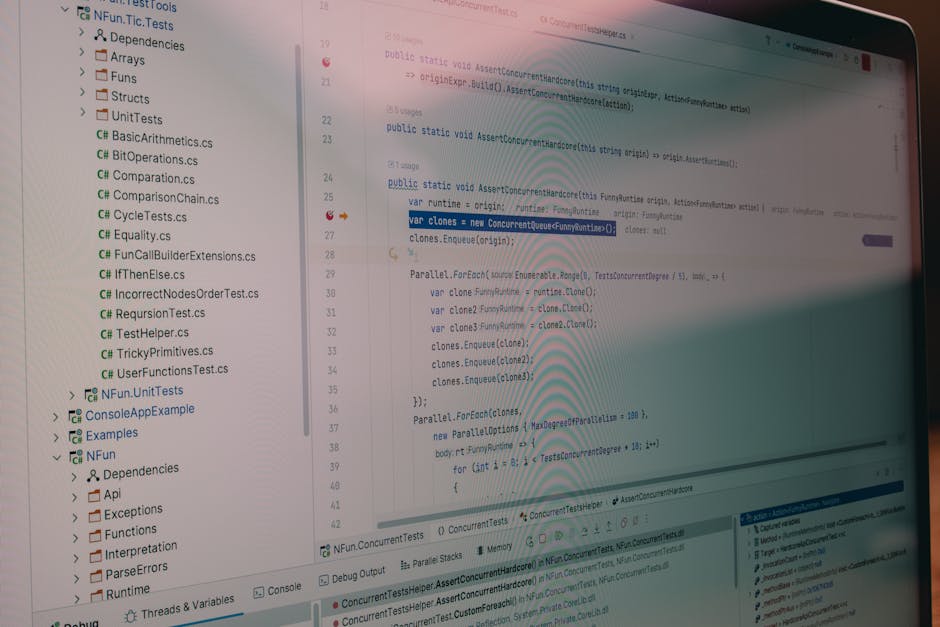
First, maintain a change impact map. For each major component of the ITSM platform, such as ticket routing, SLA engines, self-service portal, and AI classification layers, document the five to ten workflows most critical to service delivery. This map becomes the basis for every regression test. Second, assign a designated test agent for each change category. This does not require a full-time QA role. A senior agent running through a ten-step checklist before a portal update goes live is sufficient to catch the majority of user-facing defects. Third, gate deployments on test sign-off. No ITSM configuration change should reach production without a logged confirmation that functional testing passed. This single process control, applied consistently, eliminates most of the unplanned queue surges that follow untested deployments.
Teams using customer experience management platforms that integrate CSAT survey data directly with ticket records have a natural feedback loop for testing quality. If a specific deployment date correlates with a CSAT dip in the following survey cycle, the ticket data from that period can be reviewed to identify which workflow defects drove the score movement. This closes the loop between testing discipline and customer outcome measurement, giving support team leads concrete evidence to refine their pre-deployment checklists over time.
ITIL 4 change enablement practices already call for this kind of structured assessment before standard changes are authorized. Mapping software testing basics onto existing ITIL 4 change workflows is not a process addition. It is a gap closure in a framework most US IT organizations already operate within.