

Product teams move fast. Support queues move faster. The gap between the two is where customer feedback quietly disappears. According to Atlassian (2024), product development is a multi-stage process spanning idea generation through launch, requiring cross-functional coordination at every step, yet most organizations treat support data as an afterthought rather than a primary input. IT managers overseeing help desk operations are in a uniquely powerful position here. They sit on a continuous stream of user-reported pain points, feature requests buried inside incident tickets, and CSAT scores that map directly to product gaps. The challenge is building a product development life cycle that formally captures that intelligence before it ages out of relevance.
Why Customer Feedback Falls Through the Cracks in Each Stage
The product development life cycle moves through predictable phases: ideation, validation, prototyping, development, testing, and launch. According to Splunk (2024), effective product development requires cross-functional collaboration across all these stages, yet in practice, support teams are rarely invited into stage-gate reviews. Their data accumulates in the ticket queue while product managers rely on structured surveys and user interviews conducted months apart.
The structural problem is one of format and timing. Feedback arriving through a support channel is unstructured: a user submits a ticket describing a workflow error, and embedded in that description is a legitimate product insight. But without a tagging taxonomy or an escalation path that routes product-related tickets to a product backlog, that insight expires inside a closed ticket. CSAT scores attached to resolved tickets add a second layer of signal that also typically goes unread by anyone outside the support org.
Consider an IT support team of 12 managing 500 weekly tickets across three priority tiers. At that volume, P3 tickets carrying feature-gap observations are routinely resolved and archived without any product team member reviewing them. The FCR rate looks healthy. The MTTR stays within SLA. But the product team proceeds to the next development stage without knowing that a specific workflow is generating a disproportionate share of low-CSAT tickets.
“When support data is not structured for product consumption, organizations are effectively discarding a continuous feedback loop that no user survey can replicate at the same frequency or specificity.”
Fixing this requires deliberate process design, not goodwill between teams. The product development life cycle needs formal handoff points where support intelligence is reviewed, not just accessible in theory.
Structuring the Ticket Queue to Feed Product Stages Directly

The first operational change is taxonomic. Every ticket classification scheme should include a product feedback category alongside incident, service request, and change request. When agents tag a ticket as containing a feature request or a usability observation, that tag makes the ticket queryable by product managers without them having to read through raw support transcripts.
Modern help desk platforms with NLP-based auto-classification can take this further. The platform reads ticket content on submission and applies a secondary tag when language patterns match known product-feedback indicators: phrases like “there is no option to,” “the system does not allow,” or “it would be useful if” are reliable signals. Agents review and confirm the tag rather than generating it from scratch. This reduces the manual overhead that typically causes the tagging discipline to erode over time.
Mapping Tags to Product Development Stages
Once the tagging layer exists, the next step is mapping tag categories to specific stages in the product development life cycle. A product feedback tag on a ticket submitted this week is most relevant to the ideation and validation stages of whatever cycle is currently open. Routing logic in the help desk platform can create a shared view, a filtered report, or an automated digest that lands in the product team’s workflow at weekly intervals.
This does not require a direct integration between help desk and product management tools, though that is the most efficient path. A scheduled report exported from the ITSM platform and delivered to a product Slack channel or email distribution list achieves the same result with less technical overhead. The discipline is in the cadence, not the tooling.
| PDLC Stage | Feedback Source | ITSM Mechanism | Review Cadence | Owner |
|---|---|---|---|---|
| Ideation | Feature request tickets | Auto-tagged ticket report | Weekly | Product Manager |
| Validation | Usability complaints | Filtered CSAT summary | Bi-weekly | Support Lead + PM |
| Prototyping | Beta user incident tickets | Dedicated ticket queue | Daily during sprint | Dev Lead |
| Development | Regression reports via tickets | Change request log | Per sprint | QA + Dev |
| Testing | UAT escalation tickets | Priority-flagged queue | Real-time alerts | IT Manager |
| Launch | First-week incident volume | MTTR and FCR dashboard | Daily for 30 days | Operations Director |
Using AI-Assisted Triage to Surface Product Signals Before They Age
Feedback has a short shelf life. A usability issue reported in week one of a development sprint is actionable. The same issue surfaced three months later, after the sprint has closed, requires a change request to address and carries a much longer path to resolution. Speed of signal extraction matters as much as the signal itself.
According to Dragonboat (2024), the product development life cycle covers everything from market research and ideation through prototyping, and the quality of inputs at each stage directly determines downstream outcomes. AI-assisted triage addresses the speed problem directly. When the help desk platform flags SLA breach risk 15 minutes before a deadline, agents act on it. The same logic applies to product feedback: when the platform surfaces a cluster of similarly-tagged tickets, a product manager can act on a pattern before the sprint closes rather than discovering it during a retrospective.
Specific AI capabilities that help desk platforms apply in this context include:
- Sentiment analysis on ticket content to flag frustration signals even when no explicit complaint is made
- Duplicate detection that groups tickets describing the same underlying product issue, giving product teams a volume signal rather than isolated anecdotes
- Knowledge article surfacing that identifies when existing documentation does not address a recurring user question, pointing to a product gap rather than a support gap
- Incident priority auto-classification using NLP, ensuring product-impacting issues receive appropriate escalation path treatment from submission
ITIL 4’s emphasis on value co-creation aligns directly with this approach. Support operations are not downstream from product; they are a continuous input channel. Teams that instrument this channel with AI-assisted classification are effectively running a permanent feedback loop at no additional data collection cost.
Building Cross-Functional Review Points Without Slowing the Cycle
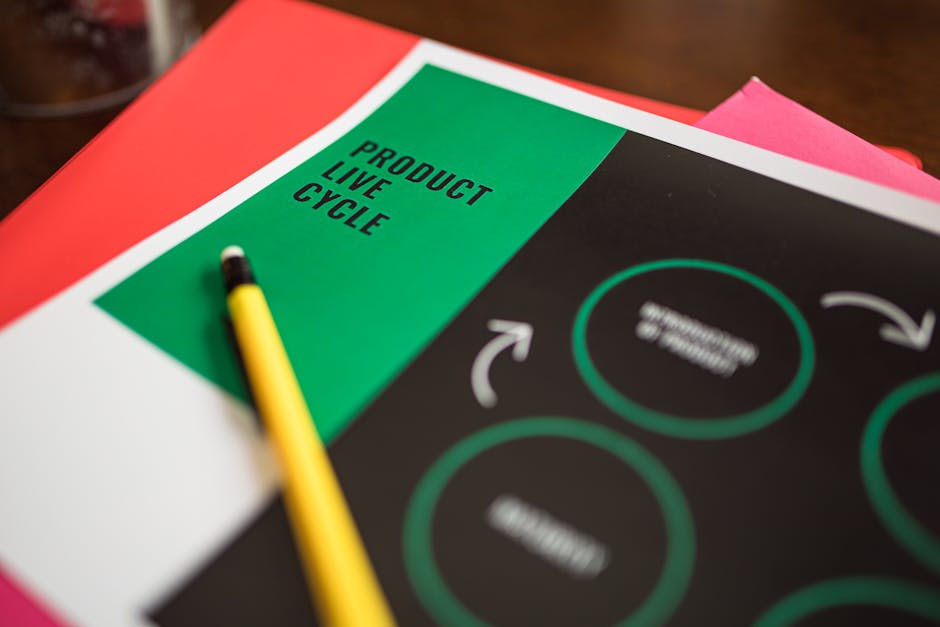
The most common objection to embedding support data in the product development life cycle is that it adds meeting overhead. Product teams already manage sprint ceremonies, stakeholder reviews, and roadmap sessions. Adding a support intelligence review feels like another recurring event in a calendar that is already at capacity.
The answer is not a new meeting. It is a standing agenda item in existing ones. A five-minute slot at the start of a sprint planning session to review the week’s top-tagged product feedback tickets requires no additional scheduling. The support lead sends a digest 24 hours ahead. The product manager reviews it before the session. Patterns that meet a defined ticket-volume threshold, for example, five or more tickets describing the same workflow gap in a two-week window, are flagged for backlog consideration. Everything below that threshold is logged and archived for future reference.
Defining Escalation Criteria for Feedback That Warrants Immediate Action
Not all product feedback belongs in a weekly digest. Some incidents reveal a product defect significant enough to trigger a change request mid-cycle. Defining escalation criteria in advance, in the same way that incident priority tiers are defined in the CMDB, prevents the product team from being flooded with low-signal tickets while ensuring critical signals reach them immediately.
A practical framework: P1 product-impacting incidents that affect more than a defined number of users trigger an immediate notification to the product lead. P2 issues with CSAT scores below a defined threshold enter the next sprint’s backlog automatically. P3 and P4 product observations accumulate in the weekly digest. This mirrors the same priority-tiered logic support teams already apply to their ticket queues. Extending it to product feedback routing requires no new framework, only a deliberate mapping exercise.
Operations directors overseeing both support and product functions are well-positioned to own this mapping. The outcome is a product development life cycle that processes customer feedback continuously rather than periodically, without adding process weight that slows the cycle down.