

Studies are based on the use of a sample of a population. Two significant sampling methods are probability sampling (when participants are chosen randomly so they can be statistically extrapolated) and non-probability sampling (when participants are not chosen randomly, but by preference, which is more often due to time- and cost-saving reasons).
Researchers resort to the latter when they are under tight deadline, have limited budget or even limited access to the entire target population. This article breaks down the most accessible form of non-probability sampling, its core benefits, and the critical limitations researchers must address.
What is the meaning of convenience sampling?
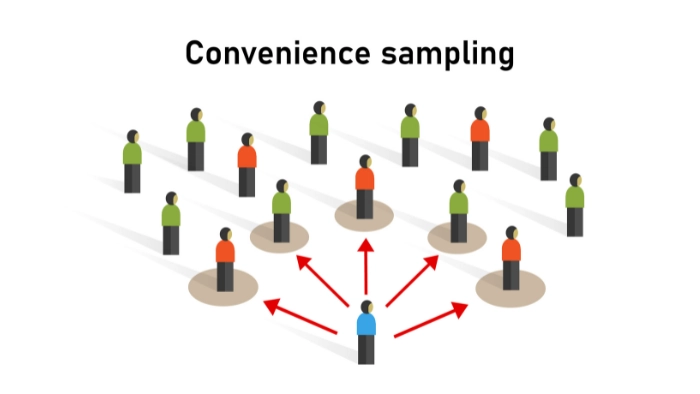
Convenience sampling, often referred to as opportunity or accidental sampling, is the most common type of non-probability sampling. It concentrates on collecting information on participants who are considered the most convenient and easy to reach by the researcher.
As compared to techniques that fall within the probability approach, which involve a set of fixed criteria and random sampling, a researcher who relies on the convenience sampling technique chooses any available and willing individual.
This may involve interviewing individuals within a local shopping area, within the workplace or within an online community. Given how quickly this approach yields initial results, it is particularly valuable for exploratory work and quick data collection.
What is the difference between random and convenience sampling?
This is the main distinction between the selection process and subsequent inference of power. Probability sampling (random sampling) gives an equal probability of inclusion to all members of the population and the researchers are able to make strong and generalized statistical inferences that relate to the whole population.
On the other hand, convenience sampling is purely based on availability, that is, the sampled are not representative of the overall population heterogeneity. This non-random sample will automatically create a sampling bias, since one will be highly biased towards people who were in a given place at a given time.
Thus, convenience sampling is fast, but it loses the power to generalize results to the entire target market.
Why is convenience sampling beneficial for initial research?
The convenience sampling method is highly attractive to researchers for several reasons, primarily speed and resource efficiency. It is quick and affordable because it requires minimal training or preparation to execute, making it ideal when you need to act quickly to meet a deadline.
Moreover, it is very appropriate where preliminary work is involved, e.g. pilot studies where a researcher is trying to get a first impression of opinions, habits, or values and does not want to commit to costly full-scale research. The convenience sampling technique of pilot studies assists managers in making quick and evidence-based decisions using primary data at the first stage.
What are the risks of sampling bias and reduced external validity in this approach?
Although the advantages of speed are also considerable, researchers are under a strong obligation to be cognizant of the disadvantages, particularly, the risk of sampling bias. The sample might not be representative since participants are selected based on convenience and therefore might not cover such groups of people, which could bias the findings and affect the validity of the study negatively.
As an example, a survey of customers on a one-day basis may not capture the opinions of a significant section of the target audience. Such low representativeness implies that any resulting findings can also be subject to low external validity, to which the findings can be extrapolated to the larger population.
It is necessary to recognize that researchers should note this sampling bias to avoid making a misleading conclusion and in order to improve external validity to combine this method with other sampling methods.
Conclusion:
The convenience sampling method is a highly useful research tool, especially when resource limitations or time constraints prevent the use of full probability methods. It remains the most effective way to conduct preliminary research and quickly gather essential data for pilot studies.
However, its limitations, particularly the risk of sampling bias and the potential damage to external validity, must be accounted for during the analysis phase. When used wisely, often in conjunction with qualitative methods or as a precursor to broader studies, convenience sampling can effectively answer many immediate research questions and inform strategic decision-making.